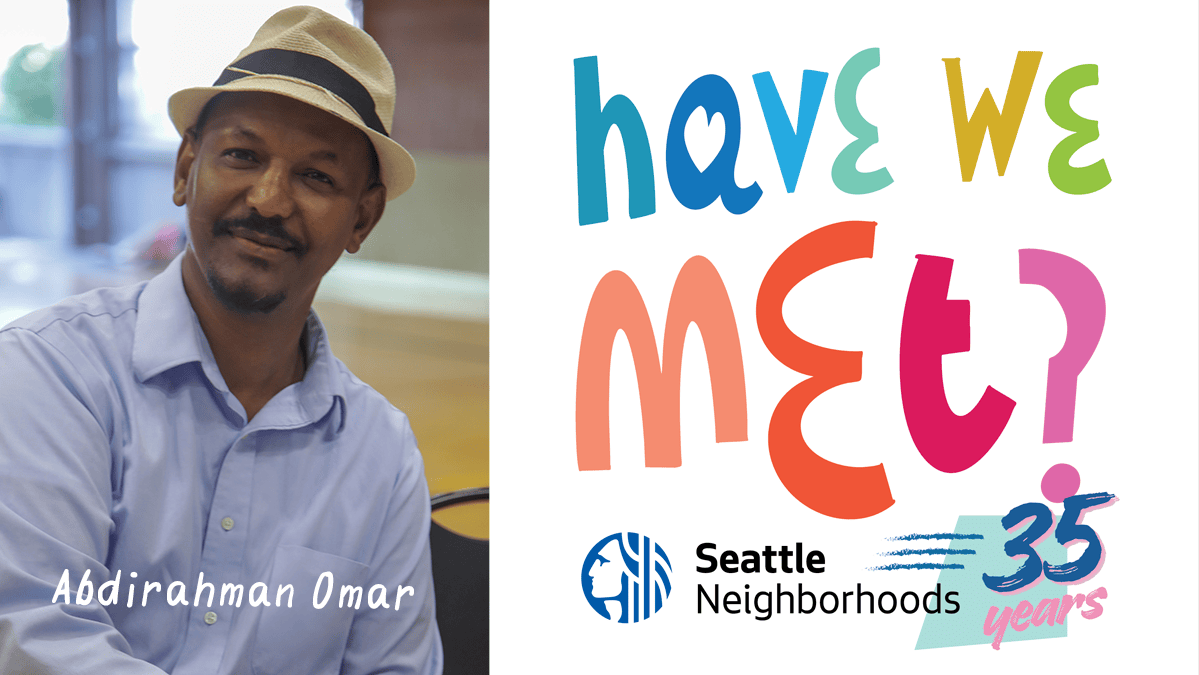
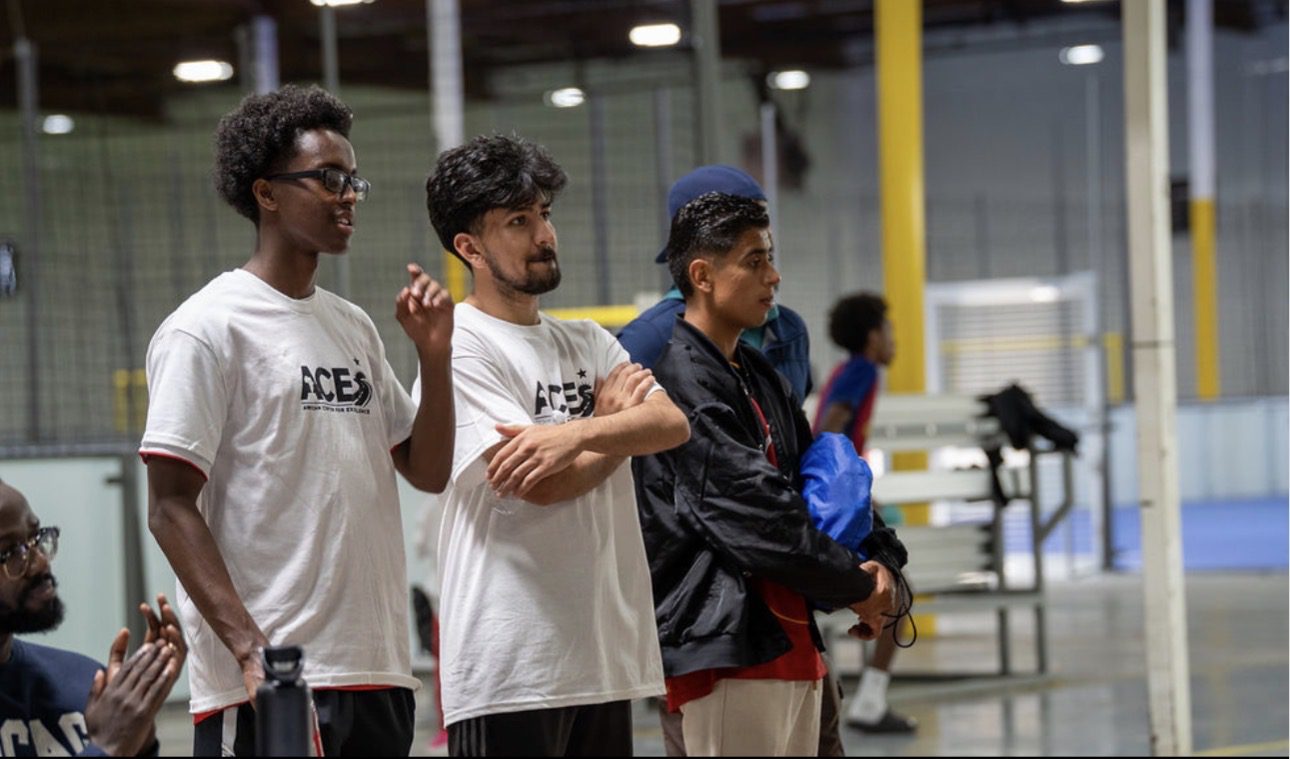
Abdirahman Omar has served a Community Liaison for the Seattle Department of Neighborhoods for over a decade. From outreach and engagement campaigns to policy implementation, culturally competent communications, and grassroots mobilization, Abdi has consistently shown up as the connector between institutions and the people they are meant to serve. He is the founder and executive director of African Center for Excellence (ACE), a community-based organization serving African, and immigrant youth and families in Seattle and King County.
How do you define community in your work?
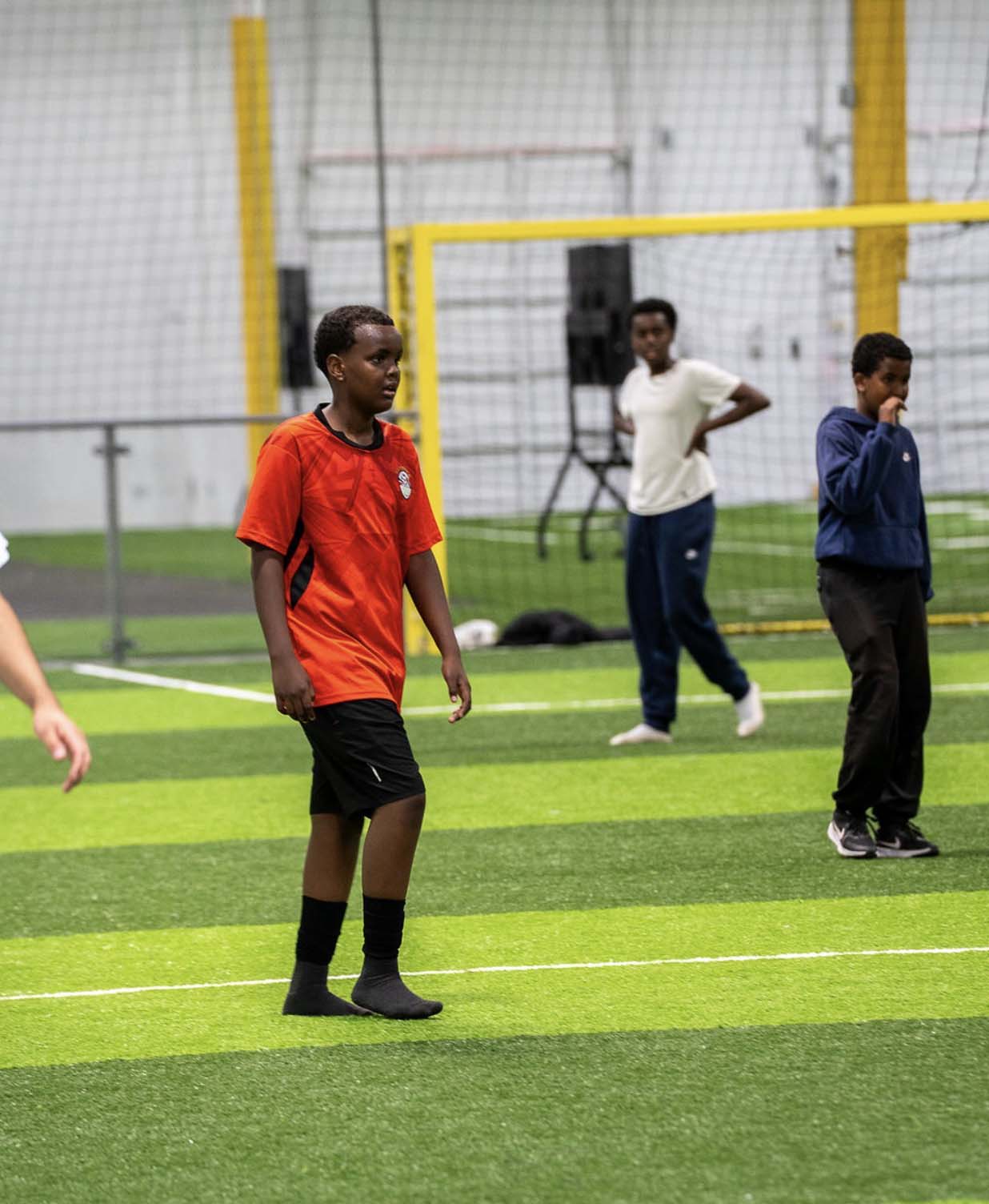
Community, in my work and in my bones, is not a zip code. It is not a census tract or a demographic category in a grant report. Community, to me, is the web of belonging that forms when people who have been told they are on the margins decide—together, quietly, persistently—to move toward the center. The shared experience of arriving somewhere new, of making a home, and of raising children who will inherit a city that their parents helped shape without always receiving credit for it. When I say “community,” I am talking about the Somali mother who wakes at 4:30 AM to drive her son to practice before her double shift at work; the East African elder who can name every player from the Somali national team across the last three decades and watches every Premier League weekend match with the kind of devotion most people reserve for prayer; or the teenager born in Seattle to Eritrean parents who has never stepped foot on her parents’ homeland, but who plays football like the memory of those red soil pitches was somehow passed down through her blood.
Across every African community in Seattle, football [soccer] is the language that precedes every other. The game crosses clan lines, national borders, generational tensions, and religious differences with an ease that no institution or policy has ever managed to replicate. It is one of the most profound social technologies our communities have ever inherited. This World Cup was a mirror in which our community—Somali, East African, immigrant, Black, and proud—saw itself reflected for the first time on a genuinely global stage, in our own city.
What does it mean to build trust?
Trust is the hardest currency to earn in this work, and the easiest to lose. The communities I serve have survived displacement, family separation across continents, years in refugee camps, and resettlement processes that asked everything of them while offering very little in return. They have had extraordinary and consistent experience with institutions that promised much and delivered little. They have been studied, surveyed, invited to one-time focus groups, and then quietly forgotten when the grant cycle ended. They carry that history. And that history does not simply dissolve because a new organization with good intentions shows up and says, “We’re different.”
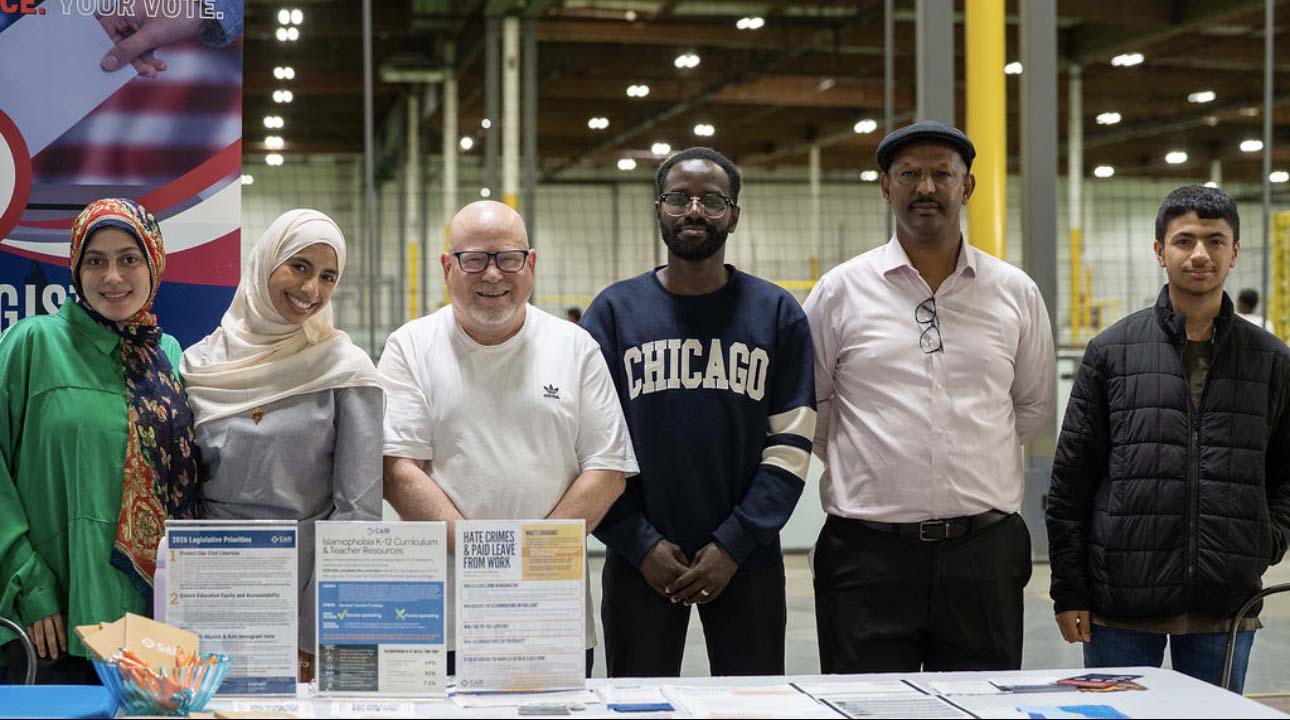
Trust is not built through a single meeting or a single grant announcement. It is built through the accumulation of small kept promises, repeated over years, until the community knows that you will be there when you say you will. Building trust means accepting that you are not the protagonist of this story. It means sitting in the back of the room before you ever stand at the front and learning people’s names—not just first names but their children’s names, their mother’s names.
There is also the specific challenge of institutional trust. Many Somali and East African families carry a deep, historically grounded skepticism of government and large organizations. This is not irrationality, it is wisdom earned through lived experience of institutions that have caused harm: colonialism, civil war, camp administration, immigration enforcement, systems of surveillance dressed up as social services. When a city agency or a well-funded nonprofit walk into our community, they are not starting from zero. They are starting in negative territory, and they need to know that. My role is to hold that space open, protect it, and make sure that when an institution is genuinely ready to listen the community has a platform and a microphone, not just a seat in the corner.
What does “showing up for community” look like in practice?
Showing up is unglamorous. I want to say that plainly, because there is a version of “community engagement” that gets described in grant reports and press releases that sounds elegant, strategic, and deliberately planned. The real version looks different. Showing up is being at the mosque, church, or community space on a Friday afternoon to talk about the youth soccer program—not because you were invited through a formal channel, but because you know that is when families are gathered and open to conversation. It is driving a child to a Saturday morning game when their parents could not leave their shift.
Showing up also means translating not just language but culture. It means explaining to a City of Seattle program manager what Eid Al-Adha means for scheduling—that you cannot hold your program kickoff on that day, that attendance will be close to zero, and that rescheduling is not an inconvenience but a prerequisite of respect. It means knowing when to push and when to hold, when to advocate for change and when to honor tradition, and having the community’s trust deeply enough that they tell you which is which.
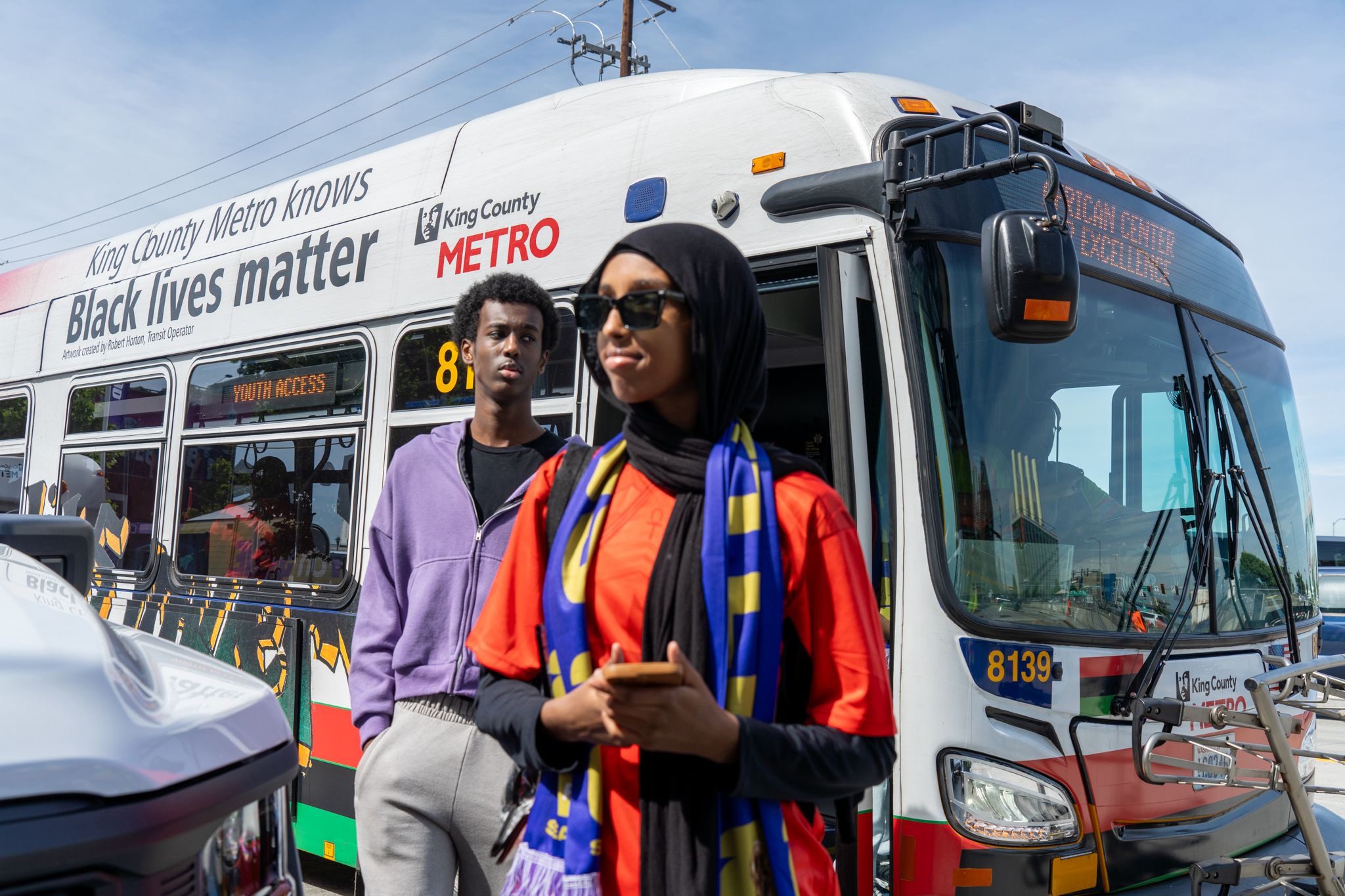
This summer, showing up meant making sure that no ACE youth missed the World Cup experience because of a transportation barrier. Lumen Field is only eight miles from Tukwila, but for a family without a car, for a teenager navigating the bus system alone, for a mother working a Saturday shift who cannot drop off and pick up,eight miles might as well be eighty. This is exactly why the partnership with King County Metro and the City of Seattle through the #WorldCupYouthGroup initiative mattered so profoundly. It was the difference between a World Cup that included our growing athletes and one that happened in front of them while they watched from a distance. Presence is not optional when the work is personal.
How do cultural values shape connection?
Culture is not a complication to be managed. It is the architecture of community life, and any program or institution that approaches it as an obstacle, rather than a resource, has already failed. I can speak specifically about the values at work in the Somali, East African, and African communities I serve, because I want to be concrete rather than general.
The first is collective identity. In Somali culture—and across much of African culture broadly—the individual is never understood in isolation. A person is always understood in relation to their family, their community. This is a profound strength. It means that decisions are made together, that support systems are communal rather than nuclear; that when one family is in crisis the neighborhood responds. In East African communities, change moves through respected voices. If they do not, no flyer or Instagram story will encourage participation. I have spent years cultivating relationships with community elders and religious leaders, not to co-opt their authority, but to earn their sincere understanding of our mission and the genuine endorsement that flows from that.
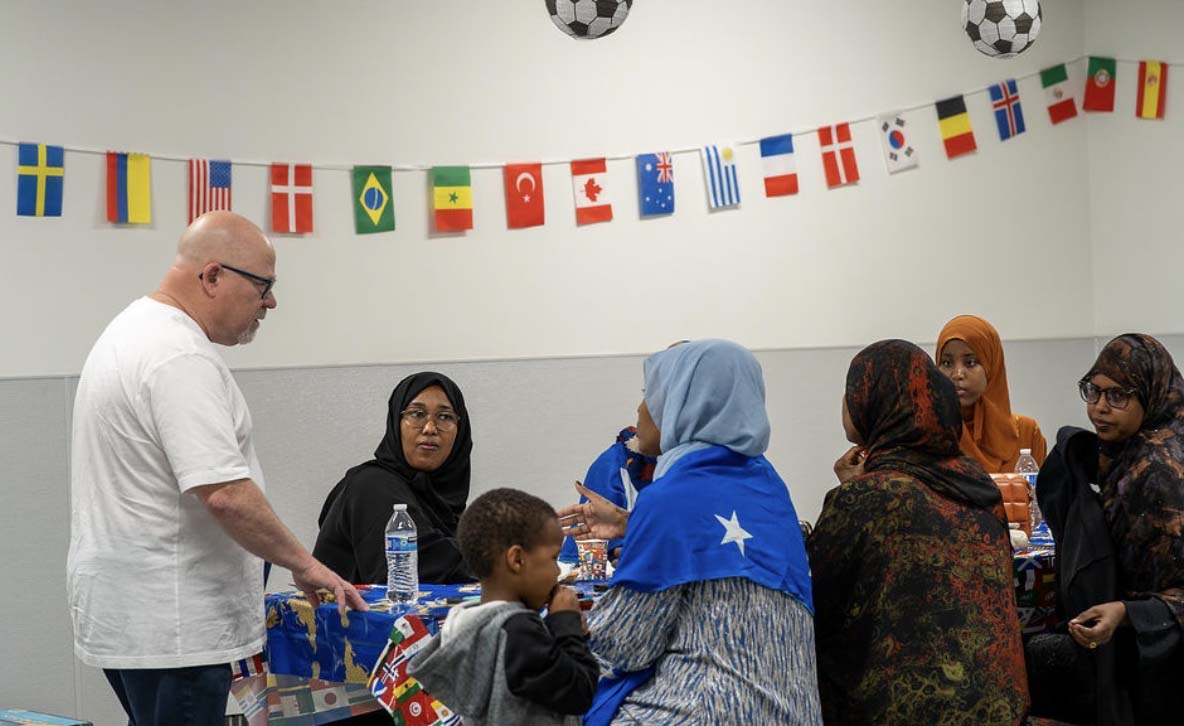
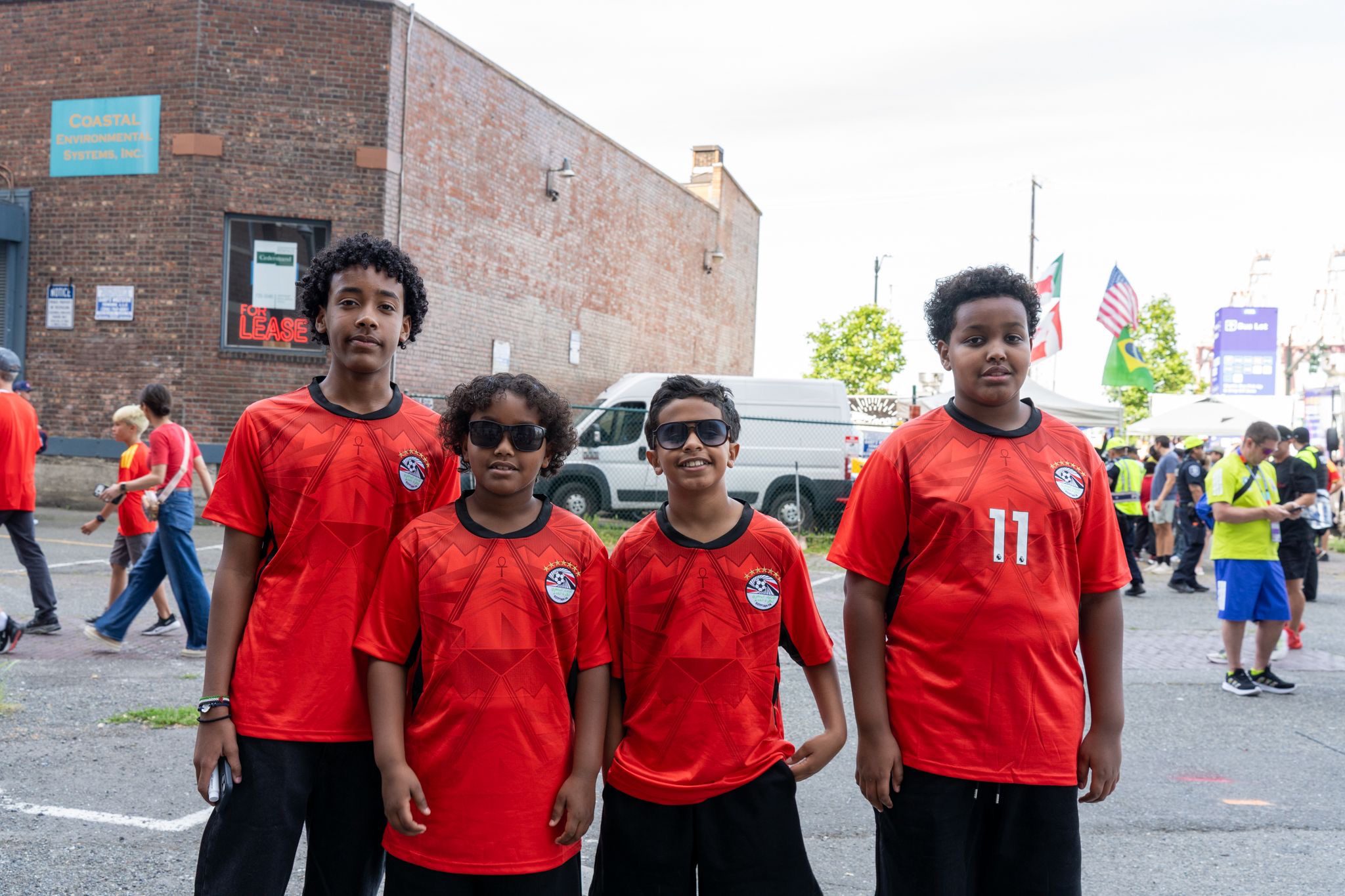
Across every East African community in Seattle football is universal. American youth athletes with African heritages carry their parents’ historical tensions, but on the pitch, they form friendships that no diplomatic process has managed to create. That is one of the most radical acts of community-building I have ever witnessed. The World Cup is not simply a football tournament. It is an extraordinary opportunity to make visible what our communities already know: that the game belongs to everyone, and that belonging begins on the pitch.
What keeps you going when work feels hard?
I want to be honest here, because this question deserves honesty and not the polished version of resilience that we sometimes perform for funders and public audiences. The work is hard. It is persistently, exhaustingly hard. There is the kind of fatigue that comes from advocating, year after year, for communities that the system was not designed to serve—and doing so with a smile and a PowerPoint presentation while families in your community are navigating crises that no deck can adequately represent.
And yet. I am still here. ACE is still here. And the reason is both simple and inexhaustible.
It is the face of a child who scores their first goal and turns to the sideline with an expression of pure, unguarded joy, looking for someone who is supposed to be there—and finding you there. It is the knowledge that this generation of East African youth in Seattle is genuinely extraordinary. They are talented, resilient, bicultural, and multilingual in ways that most institutions have not yet figured out how to see, let alone invest in. They deserve infrastructure that matches their potential. Building that infrastructure—even slowly, even imperfectly—is not a burden. It is a privilege.
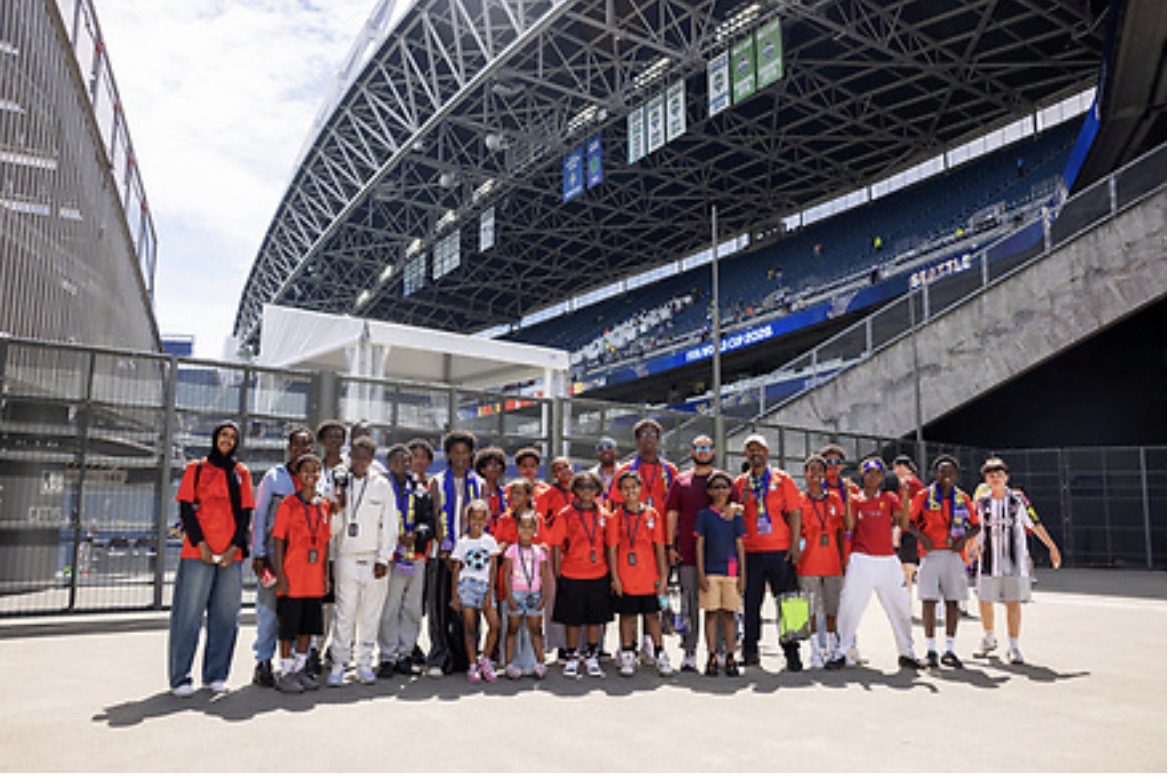
And then there is the World Cup. For the first time in my professional life, the world’s greatest sporting event came to our backyard. To Seattle, where Somali and East African families have been quietly building something remarkable for the last 25 years. The energy of the World Cup is borrowed momentum—a once-in-a-generation wave—and ACE intends to ride every inch of it. Not as spectators. As builders, here to make the case, loudly, publicly, and permanently, that our communities belong in every conversation about Seattle’s future. That is what keeps me going. That, and the faces on the sideline.
What lessons should the City carry forward?
The most effective community engagement strategy the City can deploy is to hire—at meaningful levels of leadership, not just frontline translation roles—people from within the communities being served. Cultural competency is a prerequisite, not an add-on. I have seen too many City programs translate their flyers into Somali/African languages and call it community engagement. That is not engagement, it is the appearance of engagement. Real engagement requires relationships built over years, delivered through trusted messengers, designed around community rhythms, and measured by community-defined outcomes. The City must build cultural competency into the architecture of its programs—not as a line item at the end of a budget, but as a foundational design requirement from the beginning.
I hope the momentum from the World Cup leads to investments into South Seattle, SW Seattle, Lake City, Shoreline, Tukwila, Burien, and South King County corridors where East African and immigrant communities have been building for decades. There are not enough quality youth football fields in those areas that community can access without considerable fees. Lights, turf, access, and facilities have followed wealth and political power, not need. The talent in our East African youth football community is not hypothetical, it is demonstrable, and it is currently being squandered by the absence of a formal pathway from community football to academy and professional development programs. The City, in partnership with SeattleFWC26 and organizations like ACE, should commit to building that pipeline—from identification, to development, to opportunity—as a concrete, funded legacy of this World Cup.
What gives you hope about Seattle’s future?
My hope is specific. It is earned. I have hope because of the fourteen-year-old American youth with Somali/African heritage who just made their first competitive football team and told their mother, matter-of-factly, that they want to play for the United States National Team.
I have hope because of the East African entrepreneur in Seattle who prepped his catering business to serve World Cup fans and decided that was not the destination but the launch. That forward-looking energy in the immigrant business community of Seattle and King County is one of the most potent economic forces in this region, and it is still almost entirely untapped by the systems that surround it.
I have hope because Seattle Deputy Mayor Brian Surratt said publicly that Seattle is a welcoming city and that the City is not letting go of that commitment—and because my community has decided to hold him to it. Not passively. Not hopefully. With the specific, practical, organized energy of people who have heard many promises and have learned to track them to their conclusions. That accountability is a form of civic engagement that our community has earned through years of experience, and it gives me genuine hope.
During the 2026 FIFA World Cup tournament, ACE hosted a community Watch Party & Heritage Celebration in Tukwila, WA, the ACE Youth at Lumen Field Experience, and collaborated with King County Metro and the City of Seattle to ensure ACE youth had access to the once-in-a-generation experience of the experiencing the World Cup in their own city.