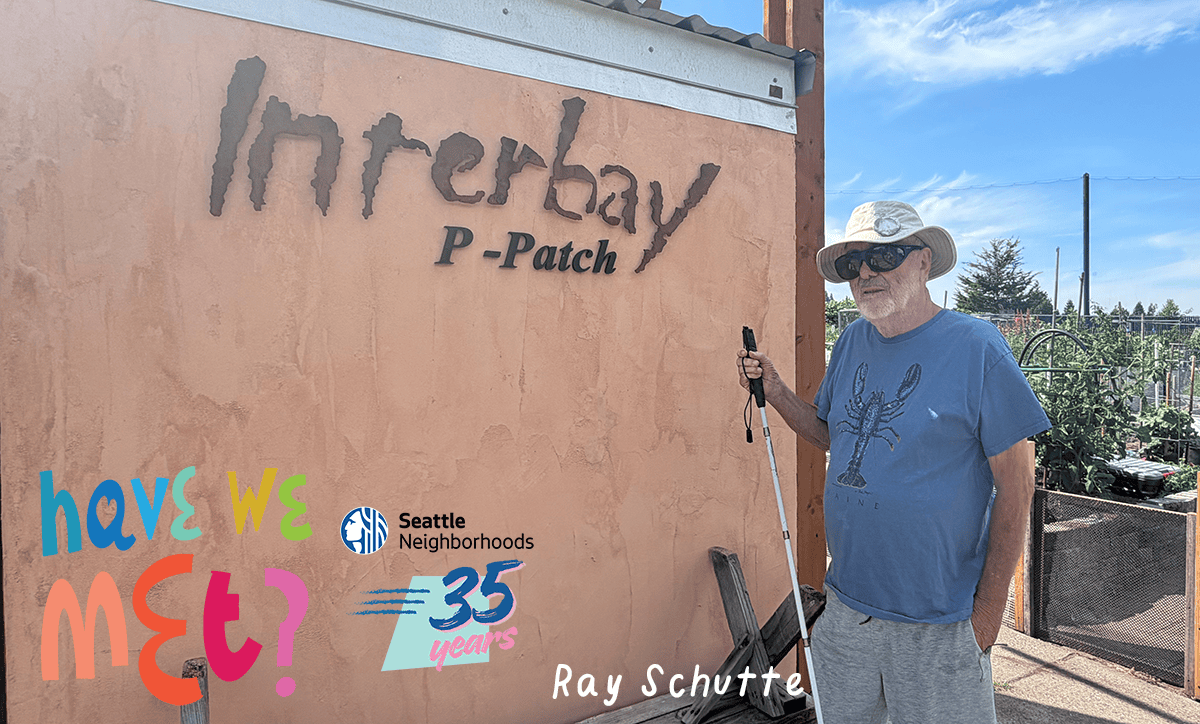
This summer, we sat down with Interbay P-Patch gardener Ray Schutte to learn about the history of the garden, the long journey to its current location, and how the space is rooted in building and harnessing community relationships.
How long have you been a P-Patch Gardener?
I’ve been involved with community gardening in Seattle for 25 years; after being on the waitlist for three years, we were given a plot at the Interbay P-Patch in1995, I think [laughs]. At that time, it was the second iteration of the garden, or Interbay 2. This garden has a bit of a long and storied history, but is all about people, community, and banding together.
Can you tell us about the history of the Interbay P-Patch?
The site of the present-day Interbay P-Patch garden and golf course was originally a city landfill. In the late 1960s, the landfill was capped with about 15 feet of hard, compact clay, and a methane gas extraction system was installed to safely vent and flair the gas produced by decomposing organic matter under the cap. In the early 70s, community members began gardening a section of land nestled between piles of dirt and debris dumped in the area from construction excavations around the Seattle Center and Belltown. They just made it work! Soon after the P-Patch Program was established, Interbay was brought into the program in 1974 as one of Seattle’s first community gardens. Sometime there, I think in 1980, the city council passed a resolution to set aside an acre of land at Interbay for P-Patch.
Eventually, after 18 years of gardening in that space, gardeners were told that a golf course was being built and would need to move the P-Patch to the northeast corner of the landfill, where the driving range is now. Back to the horrible clay soil, but the gardeners got in there and got going. This is when I came into the garden. We decided to raise up the garden beds. A fertilizer plant that had burned down and we loaded board 20 feet long on top of my little car and drove them to the garden. Probably not the safest move, but it worked [chuckling]. This was the site where we built our first food bank beds and started growing food to give back to the community, too. During my second year at the garden, I was asked to become site coordinator, which kind of surprised me, but I think it was because I had a big mouth! Not long after, it was announced that plans had changed for rebuilding the golf course. The gardeners came together to protect the P-Patch.
We started going to council meetings and put large zucchinis on each councilmember’s desks as well as delivering some to the Mayor’s office. The garden formed phone trees to inform neighbors of what was happening and contacted every newspaper and TV station in town. It was a bit of a battle, but we just wanted fair play for the garden. We did not want to move again, but it looked like that would be the case. I ended up working with then-Councilmember Cheryl Chow over the phone for a whole weekend before a resolution was passed. We were going to move the garden, but we wanted a space that was equal or better than our current location. I called the president of the golf course and had a good conversation. He said, “Ray, this never was about golf versus garden. It’s always about fair playing. You tell me where you want the P-Patch and we’ll change the golf course design.”
Susan Casey, who was on the P-Patch Trust at that time, and I signed an agreement between the garden and the Seattle Parks and Recreation Department. We got the full acre of garden plus another acre of common ground for parking and everything else. They even dropped 15 inches of topsoil in space, so we didn’t have to deal with the clay again. Now, the soil did end up being sterile, but thankfully, the Department of Neighborhoods had cases and cases of fish emulsion that were donated that they didn’t know what to do with, so they delivered it here. We started composting and building nutrients in the soil. And here we are, all these years later with this space that brings people together and continues to provide food for the community. Just like the garden, this process really relied on building relationships and working things out. It turned out to be a win/win.
Fast forward to today, how does the Interbay P-Patch continuing to be rooted (pun intended!) in building and strengthening community?
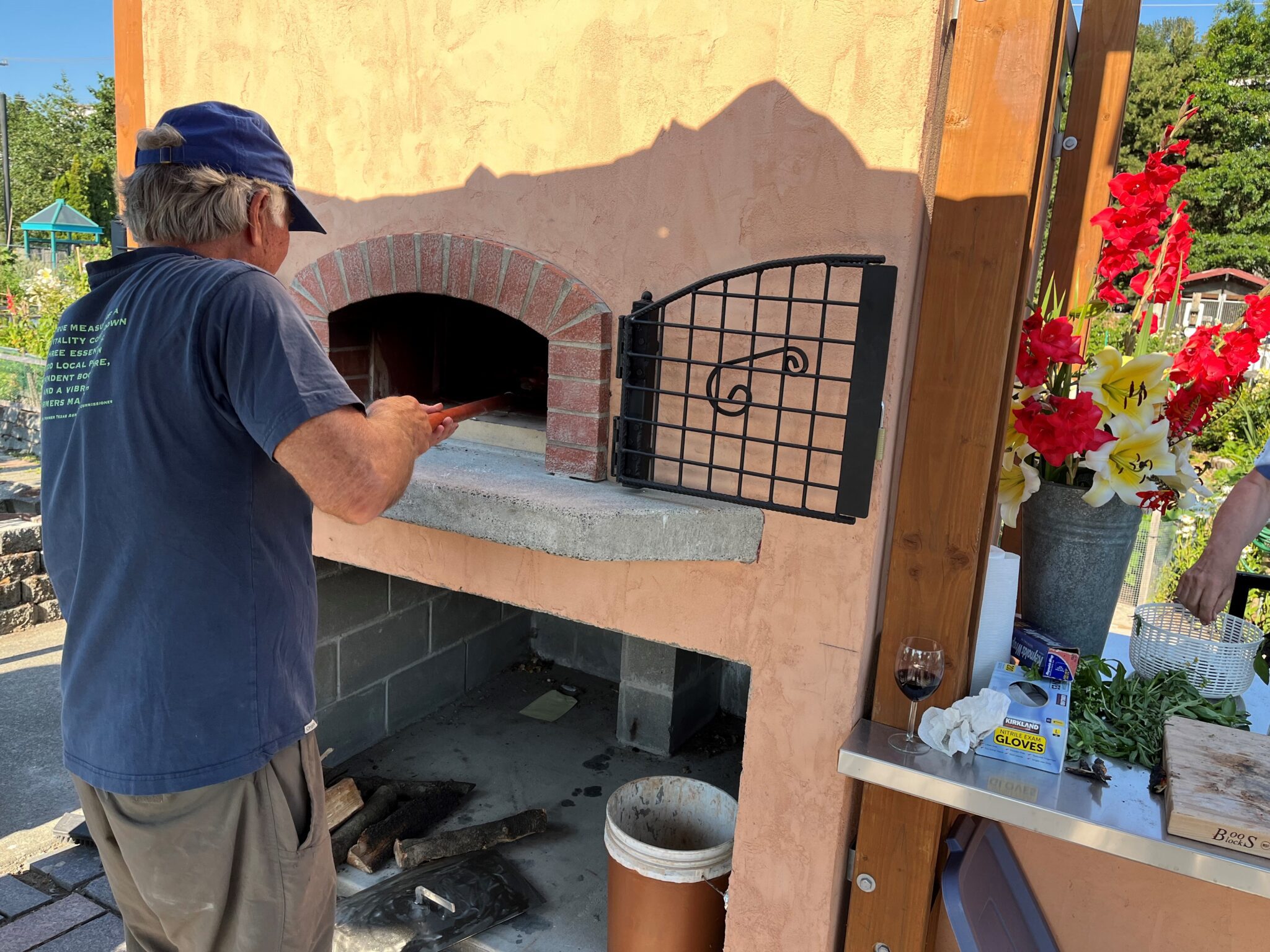
When people join the garden, they get a tour and a bit of the history of the garden, just to give them an idea of the community power this garden holds in its history. We also have a huge site coordination team now, which is good because it needs more than one point of view. We introduce ourselves to new gardeners and introduce them to other gardeners at work parties to make sure they feel welcome and included. There are also gatherings here, which I love because people can come at different times when they are available.
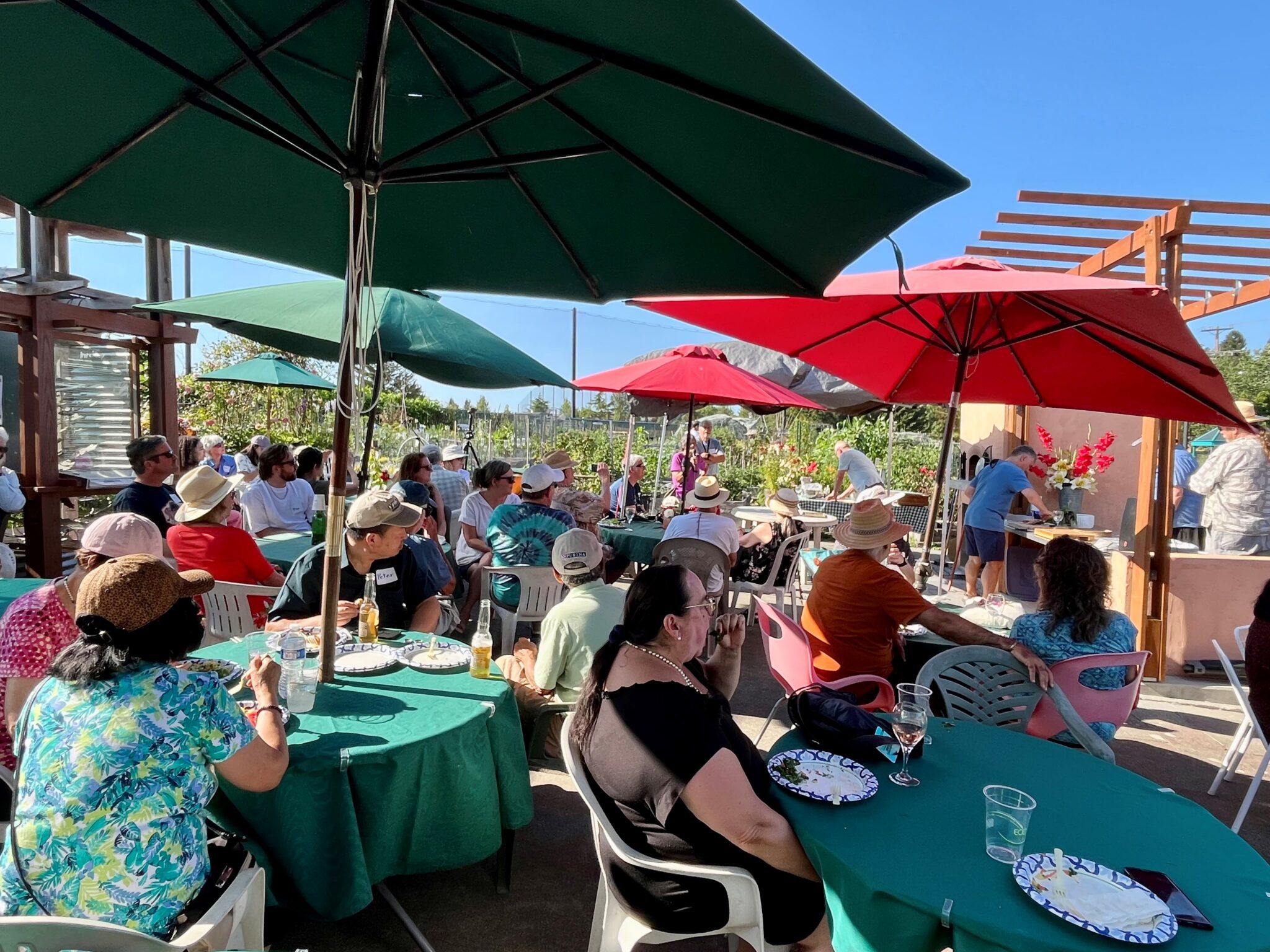
Food is the very best way to bring people together. From April to October, we have Saturday soup lunches and potlucks all the time. It is a big garden, so you don’t always see people when you come to work on your plot, or maybe you just see your plot neighbors. Sharing food together is an opportunity for people to meet more of the garden community and break bread together. Two of our gardeners met at one of the work parties here in 1999 and they’ve been married almost 20 years!
One of our gardeners is Italian and used to have a bakery. He used to bring big piles of day-old bread down for our Saturday lunches. Now we have a pizza oven, which only took us four years to build [laughs], but he came in and redesigned the tools we bought and changed the whole operation to make it work well for churning out delicious pizzas.
In your time at the garden, you’ve lost your eyesight. How does the garden community support you in continuing to be part of the P-Patch.
People are so helpful in keeping me involved in the garden. Gardeners pick me up and bring me to the garden. I can’t work much anymore, but I can sit and provide community and conversation.
[Fellow Interbay Gardener] I started here in ’97 when they moved to this area, so I’m telling you, Ray really helped build the community. Okay. We had work parties, because we were building new things, and you may not remember this, Ray, but I remember, as someone new, it was just meeting people, as, you went around and watched what everybody did, and made comments about what they were doing, and thanked them. And introduced us to each other as we were at work parties. You were a really big part of that glue of bringing the community together and we’re just so happy to still have you here!
What is your favorite thing to grow in the garden?
Oh, that’s a tough one! I would have to say Walla Walla onions are up there! I also love San Marzano tomatoes for making sauce for the pizza and I raise a lot of basil for pesto. My son and I have a pesto-making party. I just love fresh pesto, especially putting it on our fresh pizzas for the community at the garden.