Have We Met? is a special storytelling series celebrating the 35th Anniversary of the Seattle Department of Neighborhoods. Throughout the next 365 days, we’re introducing the people who help shape Seattle’s neighborhoods every day; gardeners, volunteers, organizers, advocates, artists, leaders, City staff, and neighbors who care deeply about their communities. These short conversations offer a glimpse into the lives, passions, and places that embody our work and make Seattle feel like home.
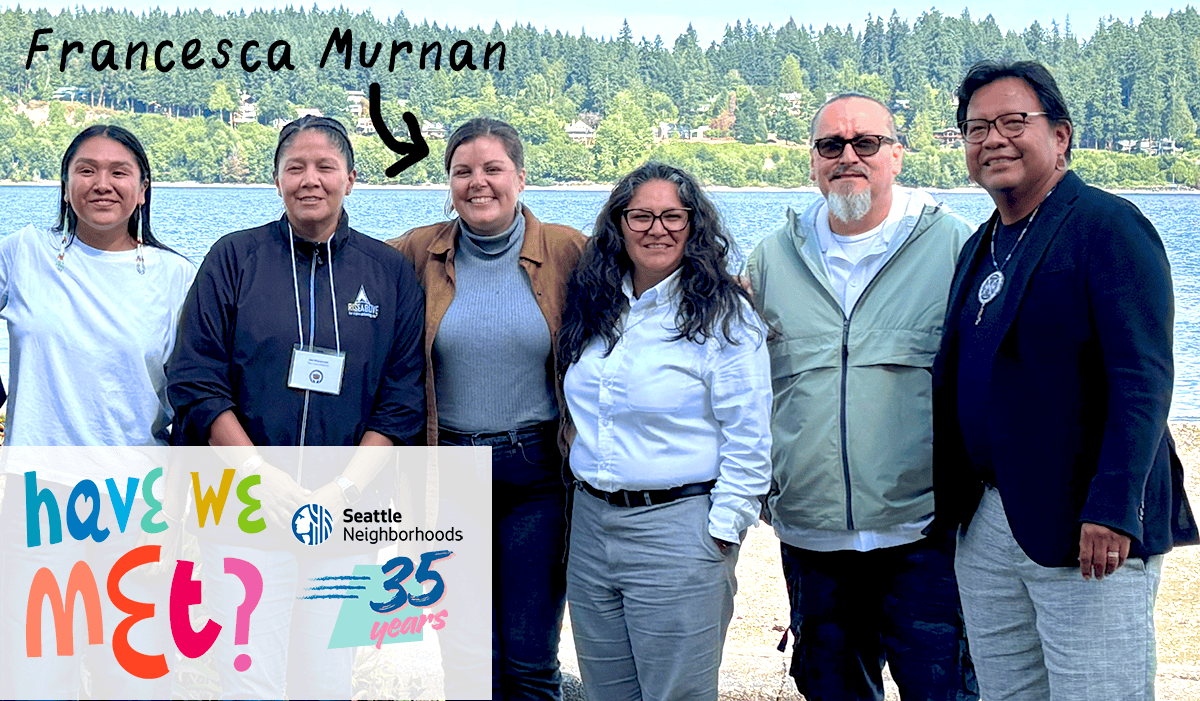
We recently caught up with Francesca Murnan (Shawnee and Cherokee), former Indigenous Advisory Council (IAC) Liaison for the Department of Neighborhoods (DON) who now serves as the Tribal Relations Director at the Office of Intergovernmental Relations. Learn more about what drew Francesca to DON, her role in launching the IAC, and fostering relationships between Native leaders and local government. Meet Francesca!
What drew you to work at DON?
I came to Department of Neighborhoods to launch the City’s Indigenous Advisory Council. For many years, I worked at urban Indian organizations serving Tribal and urban Native communities in Seattle and across the United States. As one of the many community advocates that helped develop the Indigenous Advisory Council, I knew the challenge and the opportunity ahead of us in building a culturally grounded public commission that could amplify the priorities and interests of Tribal and urban Native communities in local government. I was drawn to the chance to help lay a foundation and foster a space where Tribal and urban Native leaders could organize and amplify a shared message with local government.
What’s a moment from your time at DON that stays with you?
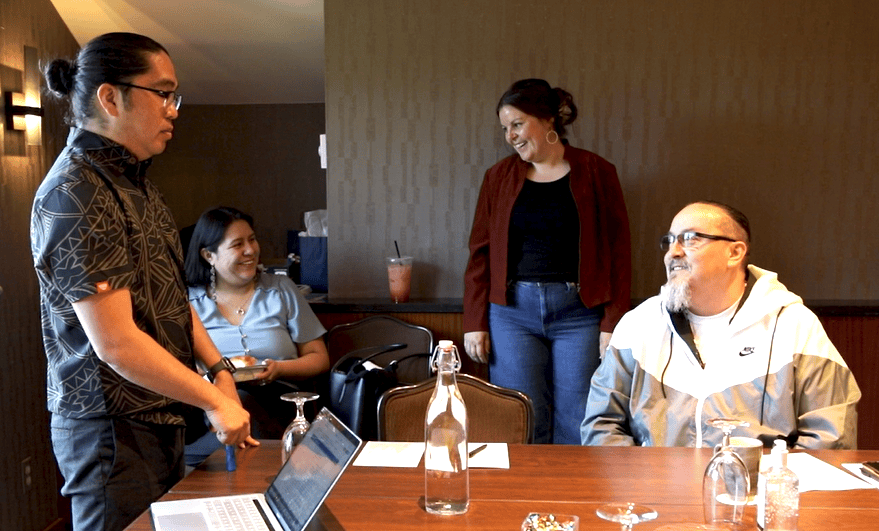
The Indigenous Advisory Council retreats are an annual opportunity for members to meet in-person. Within this group, there is a diversity of representation including elected leaders of Tribal governments, youth, elders, and leaders of urban Indian organizations. Members bring lived experience and expertise on a range of issues including health, housing, environmental stewardship, and more. My most fond memories are these magical moments of inter-tribal organizing where leaders reach across our diverse experiences as Indigenous people to weave a vision of a shared future of thriving Indigenous communities grounded in sovereignty and reciprocity.
How have neighborhoods shaped your understanding of community?
While surveying community members for the Native Neighborhood Community Study, I encountered several elders that shared stories of a former Native neighborhood in West Seattle, where dozens of Native residents raised their families in the 1970s. The reflections of these elders were fond memories of a place of belonging and inclusion and a sadness for what has been lost to time and displacement. These stories reminded me that geographic boundaries come and go, while the shared memories and experiences of urban Native people persist. The Native Neighborhood Community Study is a community vision of a new-old concept for Native people — belonging and inclusion are built by our relationships and responsibilities to each other.
What made the work hard and worthwhile?
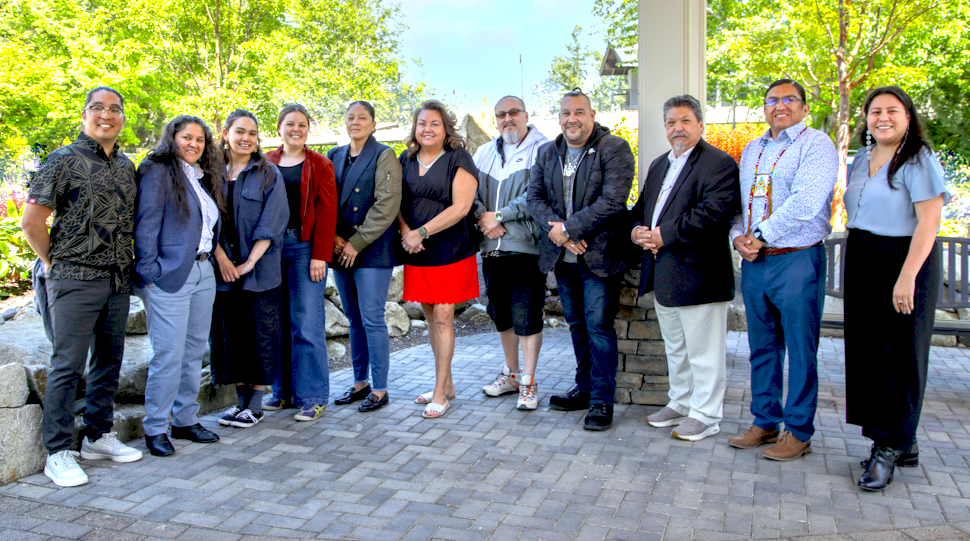
The Indigenous Advisory Council utilizes an Indigenous approach to public policy that is built on honoring political relationships and advancing racial equity. Many Indigenous communities hold unique political and legal rights that are too often misunderstood or overlooked within local government. The challenge and the opportunity of advancing local understanding of the legal, political, and racial equity context of Tribal governments and Native communities have been the hard work worth engaging in. In partnership with the Office of Intergovernmental Relations, the Indigenous Advisory Council co-hosted two Tribal Nations Summits where elected leaders of Tribal and City government came together to develop a new future of City-Tribal relations. These events are central to fostering a culture and practice of a local government that can engage with Tribal governments through a government-to-government framework and better honor trust and treaty obligations to Tribal members, regardless of where we reside.
Why is community building within neighborhoods so important, especially right now?
Long before and long after government institutions exist, there will be communities of people that look after one another. Government institutions offer a structure and framework for many functions of contemporary societies, yet the piece that has never faded from how we organize ourselves is the communities and neighborhoods in which we live and find belonging. When these two overlap, there is great opportunity for thriving and caring communities rooted in collective power.
What do you hope DON continues to stand for?
I know that Department of Neighborhoods will continue to open its doors and serve as the front porch for all Seattle residents. In my brief time with the department, I witnessed and felt the vision of building strong communities that are empowered to improve their quality of life. Department of Neighborhoods models effective organizing by amplifying and resourcing communities to develop and lead programs and solutions that meet our unique needs.
Learn more about the Indigenous Advisory Council and the upcoming Indigenous Civic Engagement Day at City Hall on Sept. 18.