The City of Seattle is investing $1,750,239 to support community-led projects through the Seattle Department of Neighborhoods’ (DON) Food Equity Fund General Grant. Eighteen community groups will receive awards ranging from $85,260 to $100,000 to advance projects that increase equitable access and opportunities to grow, learn about, and/or eat healthy, affordable, and culturally relevant foods. The projects are varied and include new and innovative food distribution sites, Indigenous food sovereignty projects, urban gardening, senior and youth food justice programs, and many more.
“With food insecurity on the rise in our region, we are committed to building a city where every resident has access to fresh, affordable, and culturally relevant foods. The Food Equity Fund invests in the creativity and leadership of Seattle’s community-based organizations, giving them the support they need to help build an equitable, sustainable local food system. With a focus on reaching communities most impacted by health inequities, these grassroots efforts ensure that every neighbor in our city has the nourishment they need to be healthy and thrive.” –Mayor Bruce Harrell
The Food Equity Fund was developed in 2021 in response to recommendations from the Sweetened Beverage Tax Community Advisory Board to increase investments in community work led by those most impacted by food and health inequities: Black, Indigenous, People of Color (BIPOC) communities, immigrants, refugees, low-income individuals, families with young children, youth, and elders. The fund is supported by the Sweetened Beverage Tax.
Food Equity Fund grants have a maximum award of $100,000 and support non-profit organizations and community groups with a non-profit fiscal sponsor. Projects awarded a grant must occur within Seattle, be accessible to and benefit those who live, learn, work and/or worship in Seattle, contribute to an equitable and sustainable local food system.
For 2025, approximately $1.75 million is available for funding through the Food Equity Fund. Seattle Department of Neighborhoods received 98 eligible applications for the 2025 Food Equity Fund, reflecting a total of $9.2 million in funding requests. The grant review process included community leaders with expertise in racial justice, food systems advocacy, and health disparities.
“The grant will directly support our ongoing efforts to provide hot, culturally appropriate weekly meals and pantry access to Eritrean and East African seniors. For homebound elders who are isolated or face mobility barriers, we deliver both hot meals and pantry items straight to their doors. This program is not just about nourishment it’s about preserving dignity, honoring culture, and creating a sense of connection for our elders. Community grants like this one give grassroots organizations like ours the ability to lead with cultural relevance and trust. We know our community’s needs intimately because we are the community. With this support, we can continue building a food system that centers equity, uplifts elders, and ensures no one is left behind.” –Makda Seyoum, Head of Operations, Eritrean Association in Greater Seattle
Eritrean community gather for a community meal service.
“This funding helps us deliver free, nutritious meals to our Indigenous relatives and their families during the postpartum transition so they can focus on bonding with their newborn. Reconnecting our parents with ancestral foods and strengthening community ties is just one of the many ways that Hummingbird Indigenous Family Services eases postpartum transition, ensuring that our people feel supported and cared for during this sacred time.” -Miriam Zmiewski-Angelova,Community and Cultural Engagement Manager, Hummingbird Indigenous Family Services
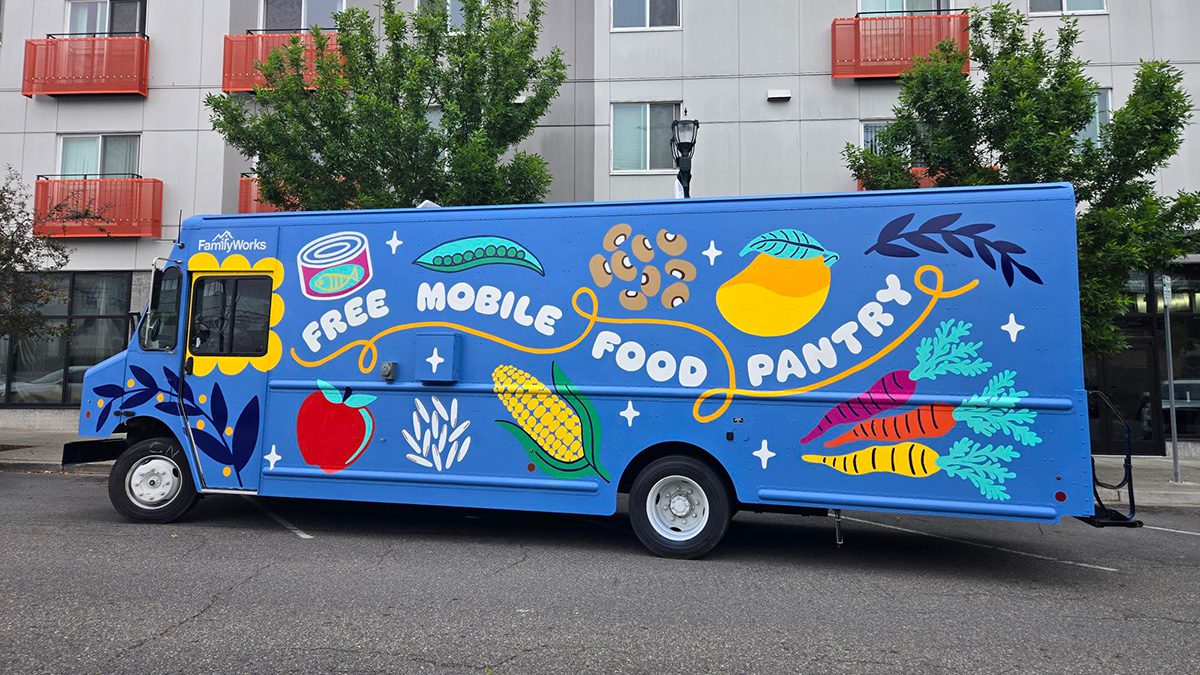
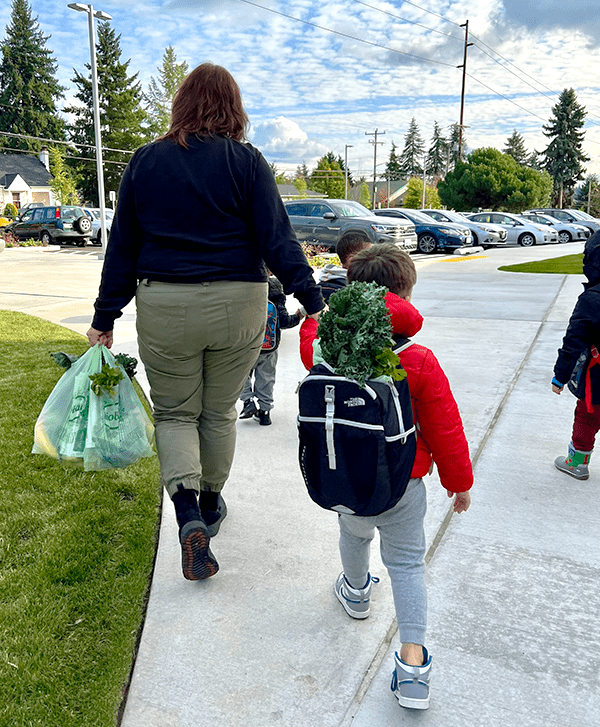
“The Food Equity Fund grant allows FamilyWorks to bring more nourishing, culturally relevant, and kid- and family-friendly foods directly to families in North Seattle who are furthest from justice. With this support, we can expand the reach of our Mobile Food Pantries, enhance our FamilyWorks Groceries to Go online marketplace, and connect children to healthy eating through fun, culturally rooted education. Community grants like this are essential because they recognize that solutions to hunger come from within communities themselves, and they invest in local leadership to build a more equitable and sustainable food system for everyone.” –Rehana Lanewala, Director of Development & Communications, FamilyWorks
A family carrying food from FamilyWorks’ Farm to Preschool program
2025 Food Equity Fund Awards
$100,000 to ALA Garifuna to continue providing a monthly, culturally relevant food pantry distribution point in Seattle to serve roughly 75-100 Garifuna households for 22 months. The fund will also support purchasing culturally specific and frequently requested ingredients, hire a distribution coordinator, build further partnership with local farms and food vendors, organize quarterly gastronomy workshops and provide access to food benefits to community participants.
$100,000 to Amigos de Seattle for the distribution of food boxes to improve family nutrition, alleviate hunger, and promote long-term food security for Latinx, Indigenous, and BIPOC communities, improving the overall well-being of Seattle’s marginalized communities.
$100,000 to Black Dollar Days Task Force/Clean Greens Farm and Market to provide up to 70 free food boxes to low-income, elderly, and youth of Seattle’ African American, BIPOC & LGBTQIA+ families during Fall 2025 & Summer 2026 growing seasons. The boxes will be filled with culturally relevant, organic vegetables grown at the Clean Greens Rainbow Youth Farm. The project will also include four backyard workshops to teach community residents and youth about backyard and inside gardening, and the health benefits of herbs.
$100,000 to FamilyWorks to expand and strengthen its community-based food access programs to better support families in North Seattle. With this support they will enhance their Groceries to Go online market to offer more kid-friendly foods and scale food allowances based on household size; increase the capacity of their Mobile Food Pantry; refine their food procurement to source from BIPOC growers; and provide nutrition education to help children build connections to healthy eating and the origins of their food.
$100,000 to Feed Seven Generations (FEED) to implement a two-year community-designed and Native-led initiative to increase access to traditional Native foods, cultural education, and economic opportunities and equity for Native producers and residents in Seattle. Through the Native Grown + Gathered Initiative, FEED will distribute locally harvested foods to about 300 Native residents in Seattle, produce six seasonal educational podcasts, and connect Native producers with consumers. This intergenerational partnership effort centers Native leadership and food sovereignty while strengthening a sustainable, culturally rooted food system.
$100,000 to Kin On Health Care Center for the Nourish & Thrive program to provide food bag distributions, cooking demonstrations, and nutrition education to low-income, non-English-speaking Asian seniors. Featuring bilingual recipes and traditional Asian dishes, the program promotes healthy eating choices while providing seniors with nutritious ingredients and bring community together for connection and conversation to help participants make informed decisions about their health and well-being.
$100,000 to Lake City Collective to support the intergenerational gardening program and La Fondita del Colectivo, a youth leadership program that will engage 10 teens to learn about food systems at the intersection of their cultural heritage through workshops and field trips. The program will also support three mothers from the Sí, se puede(Yes, we can) business cohort establish their food business by preparing 150 culturally relevant meals and snacks for the organization’s after-school programs. Lastly, the grant will support the Lake City Collective community garden to continue offering intergenerational learning opportunities for youth and community placemaking for Lake City Collective’s families at large.
$100,000 to yəhaw̓ Indigenous Creatives Collective to restore an on-site greenhouse, expand public access to green space in Rainier Beach, and engage local Indigenous and BIPOC communities in land restoration through gardening, planting events, and ecological workshops. This project will also include free arts and cultural programming that centers Indigenous Traditional Knowledge to provide hands-on opportunities for community members to engage with Indigenous practices, highlighting the intersections of food sovereignty, Native art, cultural traditions, medicine-making, and plant processing.
$99,983 to Eritrean Association in Greater Seattle to support the Senior Nutrition Program to provide 416 low-income, limited-English speaking, immigrant and refugee seniors with free healthy East African meals three days a week and grocery items once a week. The long-term goals of this project are to reduce hunger and food insecurity and promote health and well-being for participating seniors through improved food intake of culturally appropriate foods, increased consumption of fruits and vegetables, and improved nutritional status.
$99,920 to Hummingbird Indigenous Family Services for the Doulas with Dinners program. This postpartum meal delivery service provides free, nutritious, culturally aligned dinners to Indigenous families in their first month after birth. Each meal is crafted with ingredients that support lactation and postpartum healing and recovery and will incorporate locally-sourced and seasonally available meats, plants and herbs, cultural recipes and/or ethnically purchased ingredients for the Native and Indigenous Pasfika communities the organization serves.
$99,913 to Hip Hop is Green to support the Youth Excellence Program, a one year, project-based, paid internship for youth ages 11-20 that teaches leadership, ecology, farming, food security, and improving health. Using Hip Hop as a tool, actionable solutions to the challenges facing youth in our community are discussed. These include, obtaining living-wage jobs in fields such as permaculture, farming, engineering, agriculture technology, science, and biology; small business development; robotic technology, food production and more.
$99,850 to Community Soul Feed to build equitable food access and build community leadership for BIPOC residents, low-income individuals, unhoused, youth, and elders. The program will provide a monthly, home cooked meal, using food that is culturally relevant to these communities. Community members, specifically youth, will receive education and training in meal preparation, food storage, and waste reduction.
$97,207 to City Fruit to strengthen its model for gleaning and redistributing fruit by prioritizing the needs of communities experiencing the greatest disparities in healthy food access, focusing on relationship-building over transactional exchanges, and centering the expertise of our partners in all decision-making. The funding will help City Fruit build up its network and capacity to partner with organizations that use fruit to create value-added products.
$96,500 to Young Women Empowered to coordinate and implement mentorship-based empowerment programs that focus on environmental justice and healthy food systems in BIPOC communities. These programs will serve diverse young women and gender expansive youth ages 13-24 through a lens of healing and belonging. Using urban farming and food justice activities, participants gain knowledge, enhance their skills, and discover resources around growing and eating healthy, culturally relevant food.
$95,366 to Sound Generations East African Senior Center to improve overall health, well-being and resilience for elder East African immigrants. The East African Senior Center will partner with local farmers through Tilth Alliance to provide bi-weekly produce bags to 60 seniors for 24 months; support gardening/farming efforts led by the elders at the Rainier Beach Urban Farm and Wetlands; and build relationships with local food banks to increase access to culturally appropriate and healthy food.
$88,500 to Concord International Native/Indigenous Students Club for education on first foods and medicines for its students and families. The funding will help hire Native educators to lead the club and providing the materials necessary for weekly club activities. The project will include three food equity related-field trips, three food or medicine-making classes, and three family dinners featuring Native/Indigenous foods per school year. Students and families will also grow and harvest culturally relevant foods and medicines at the school’s garden at Marra Farm.
$87,740 to American Polynesian Organization to provide free culturally relevant hot meals and groceries to 100 low-income seniors every week at Beacon United Methodist Church for a year. The project will address the on-going issues of basic food problems that has shaped our food system and inequitable health outcomes such as hypertension and diabetes among the elderly by providing healthy food options that can help prevent diseases and prolong their life.
$85,260 to Nurturing Roots for a 10-week workforce development program for 15 Seattle youth between the ages of 18-22. The program will facilitate hands-on food systems education, site visits, job shadowing placements, and additional learning opportunities identified by BIPOC community members to provide participants exciting entry points into the Seattle workforce. Participants will come away with resources for promoting racial justice through new careers in the local food economy