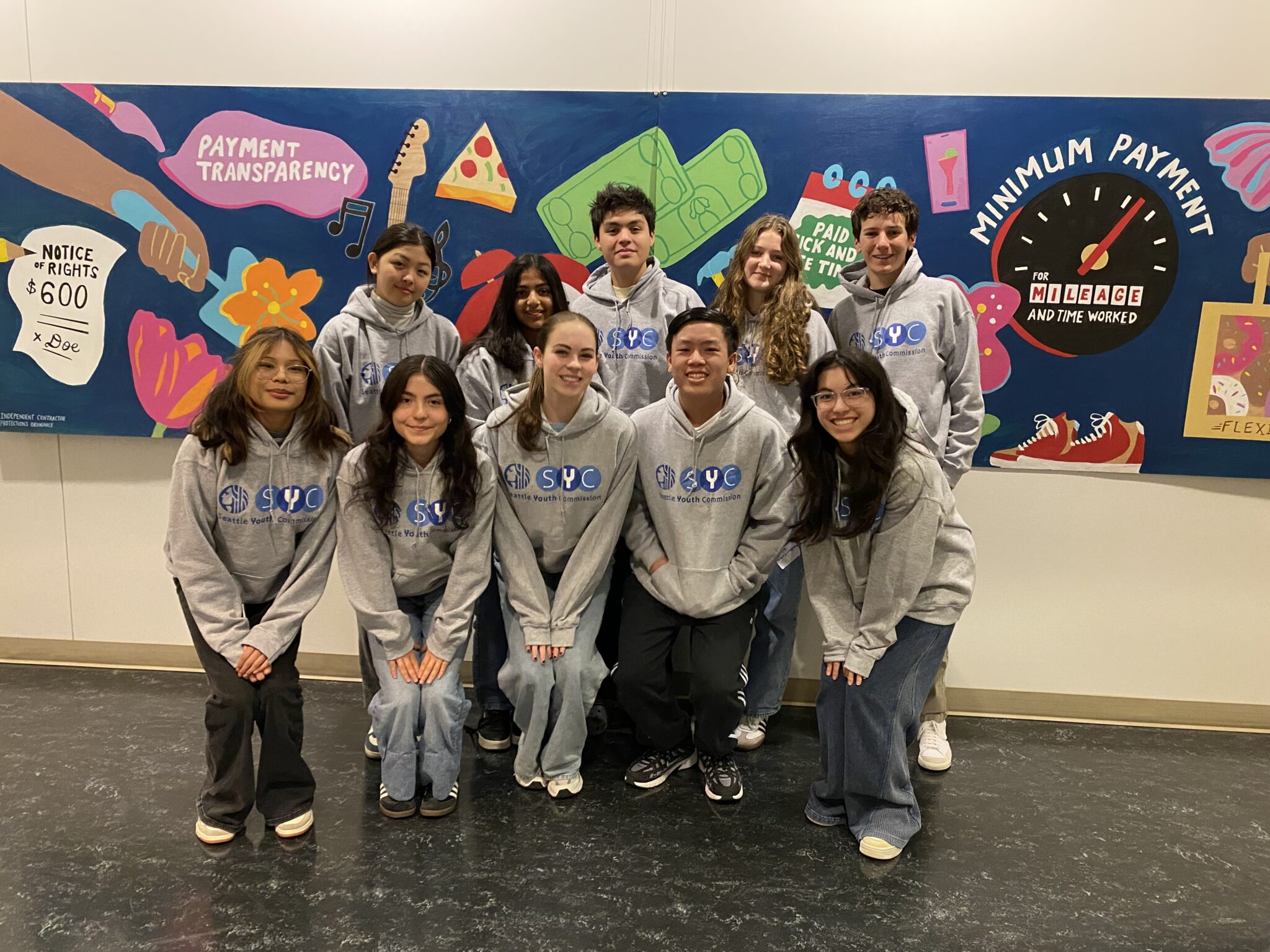
The Seattle Youth Commission (SYC) is a group of 15 Seattle teens from all over the city who are appointed by the Mayor and City Council to connect youth to local elected officials, advise on City policies, and discuss issues that youth in Seattle are facing. Working with the Seattle Department of Neighborhoods, the Youth Commissioners include a representative from each of the seven City Council Districts and eight at-large commissioners.
What’s it like being part of the Seattle Youth Commission? Join At-Large Commissioner Lila Fu as she recounts her experience at the Youth Climate Assembly!
SYC As It Happens: A First Person Project
By Lila Fu
Day 1:
“On the first day, we arrived, had lunch, and got split into groups. During lunch and the icebreakers, I met a mix of participants—many were older, in college, or already working in environmental fields—so it was pretty interesting to hear about their experiences and expertise.
We then had an introductory presentation from the organizers, including partners like the Washington Bus. They explained the purpose of the Climate Assembly: helping Seattle build a new community action plan that focuses less on prevention and more on adaptation, since climate impacts are already here. A big emphasis was on including diverse voices, especially youth, in the process.
After that, we established community agreements—things like respecting all ideas and perspectives—before diving into activities where we discussed how different climate events have affected us and will continue to.
We also heard from guest speakers: two members of the Duwamish River Community Coalition (including a youth advisor), and someone who started a nonprofit around solar-powered cars. Their perspectives were really engaging and gave us a lot to think about. We ended the day with some reflection activities.”
Day 2:
“On day two, after lunch, I talked with more people and hearing about their experiences, which again was super interesting. After some quick recaps, we jumped back into the main work. The day before, we had discussed specific climate events in groups, and on day two, we connected those events and narrowed them down to one main topic. My table chose air pollution, since a few of us had mentioned wildfire smoke.
From there, we made a big cause-and-effect map. On one side, we listed causes of air pollution—like fossil fuel use—and also why they affect people so much, such as the lack of awareness about air purifiers. On the other side, we wrote down which groups are most impacted, like communities near industrial zones or people who work outdoors.

Each group then presented their maps. One focused on traffic emissions, which tied into discussions on walkable cities and public transit—something I really liked. Another did littering, and one had an in-depth look at heat waves, which was also really interesting.”
“After presentations, we voted on which topic to move forward with, and air pollution won. We split our ideas into four categories:
- Regulations on industrial zones and high-energy tech like AI.
- Education and research funding on the causes and effects of air pollution.
- Non-carbon energy infrastructure and jobs to make cleaner energy profitable.
- Zoning and green building—from avoiding pollution-heavy areas to investing in eco-friendly architecture, walkable cities, and multi-use buildings.
After that, we split into groups again to find even more specific solutions in each category, which were the ones sent to the City as major feedback for the 2026 Climate Action Plan.”